Five Crises. One Empire.
Do Better Than History Did.
Basileus: Shield of Byzantium is a grand strategy game of the Byzantine Empire, from the death of Theodosius in 395 to the last day of Constantinople in 1453. You are the emperor. History comes for you on its own dates — Attila, the plague, the Persians, the caliphs, the crusaders, the Ottomans — and what you make of it is yours.
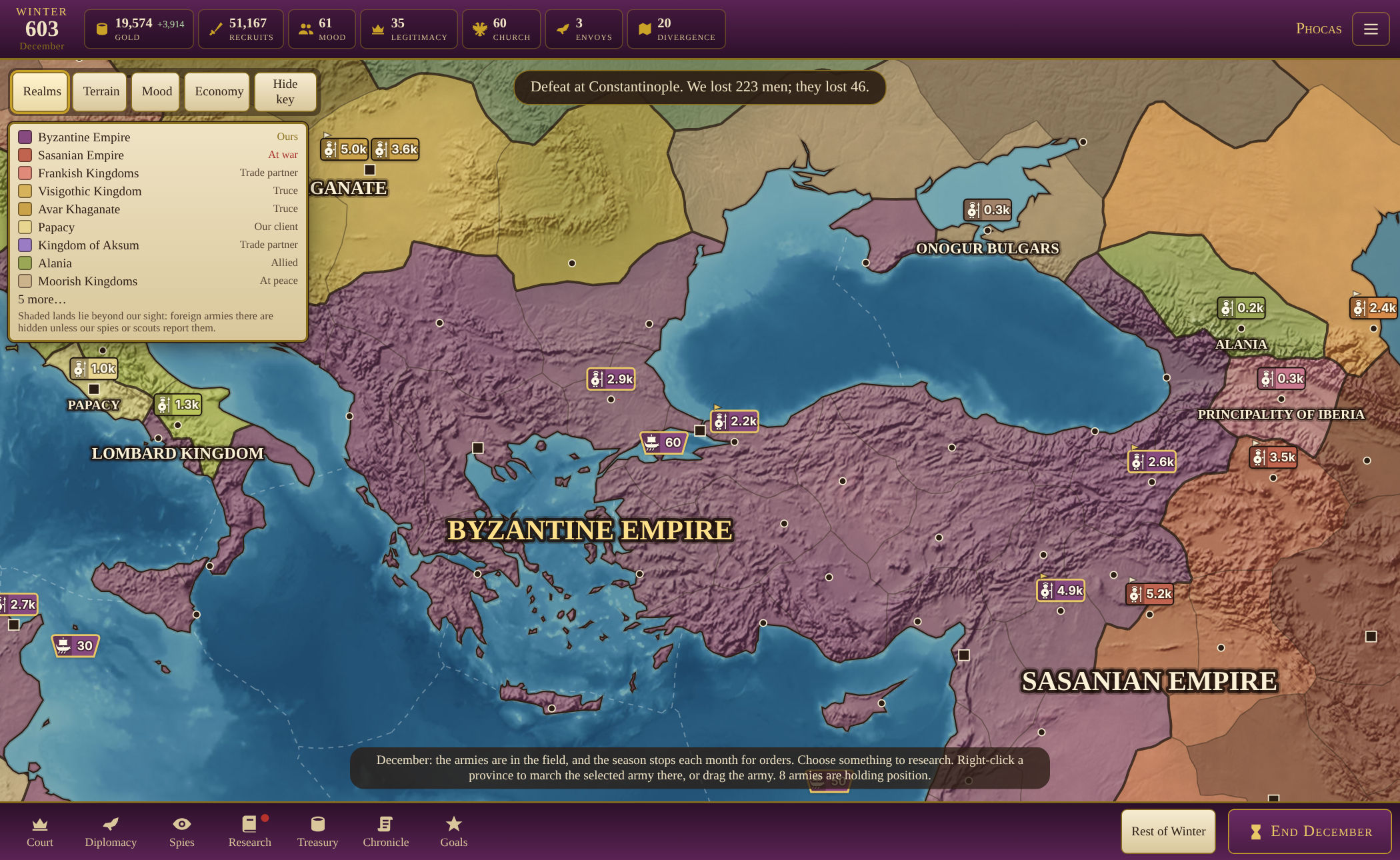
The Whole Roman World, From Your Palace
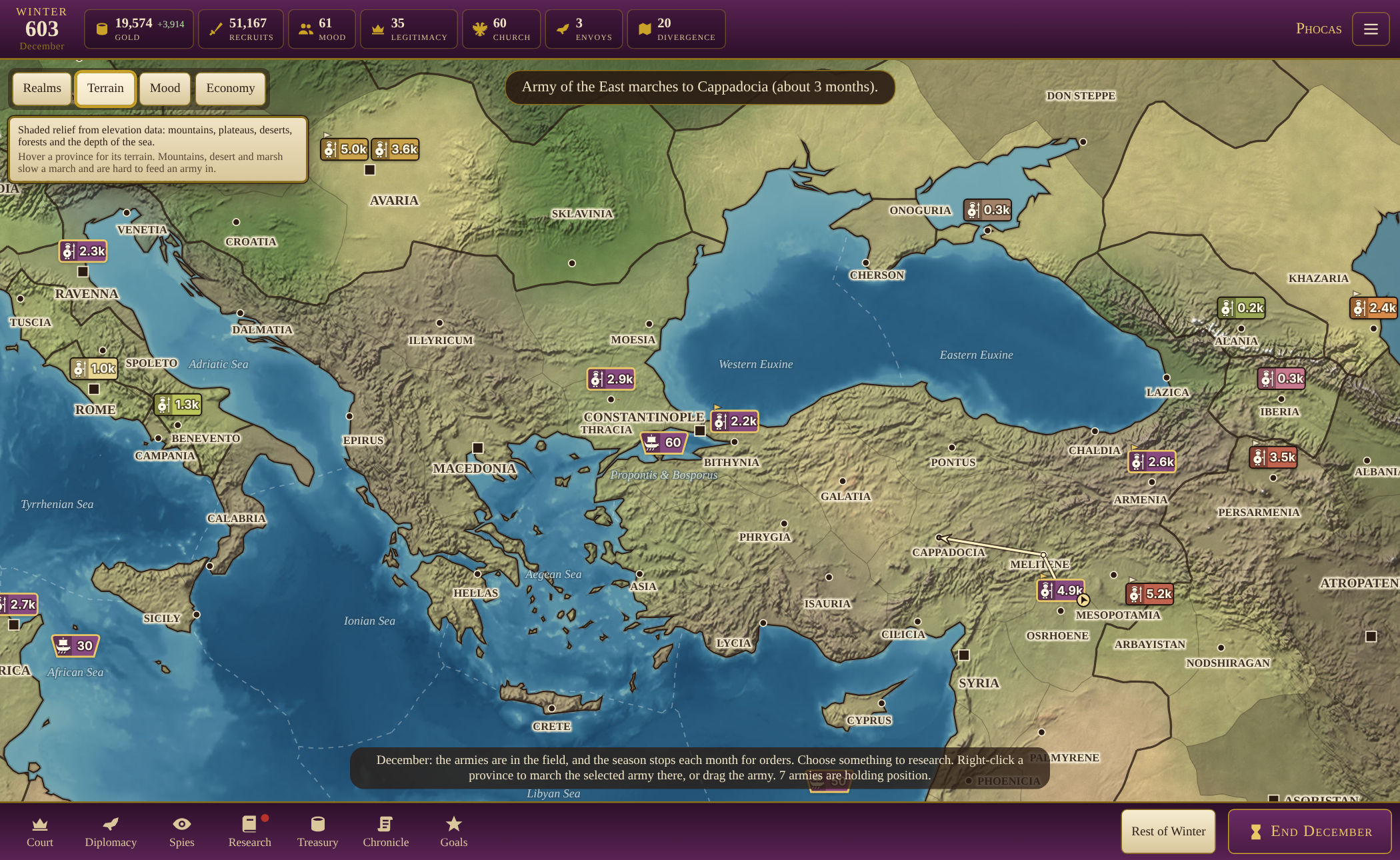
One map from the Atlantic to the Caspian, drawn over real relief. Every army and fleet you can see is where it really is; what lies beyond your sight is hidden until your spies and scouts report it.
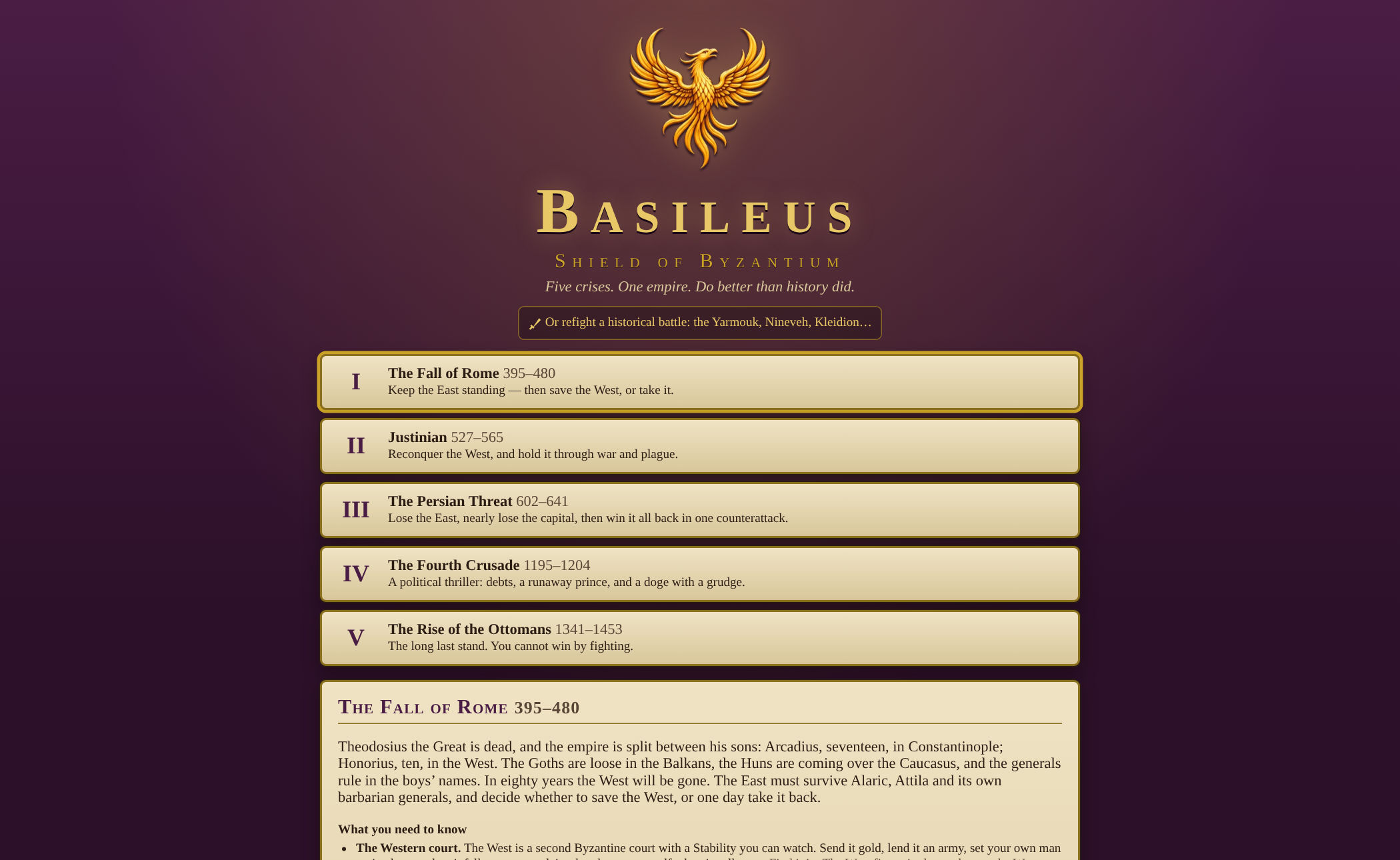
The Five Crises
Start at any of five moments when the empire could have gone either way. Each is the real situation on the real date. Play on from one into the next, and the world you arrive in is the one you made.
I · The Fall of Rome, 395–480
Two boy emperors, Goths inside the frontier, and generals who make and unmake the men on the throne. Keep the East standing while the West goes under — or go and save it.
II · Justinian, 527–565
The Nika riots, Hagia Sophia, the law code, and the reconquest of Africa and Italy. Then the plague. How much of Rome can one reign take back, and at what price?
III · The Persian Threat, 602–641
A mutiny, a murdered emperor, and the last great war of antiquity. Win it, and a new faith is already riding out of Arabia toward two exhausted empires.
IV · The Fourth Crusade, 1195–1204
A crusade in debt to Venice and a pretender with a claim. History's Constantinople was sacked by its own allies. Yours need not be.
V · The Rise of the Ottomans, 1341–1453
A civil war, an empire the size of a province, and the great guns coming. The hardest start in the game: hold the City past the day it fell.
One Timeline, 395–1453
The crises are doors into one continuous game. Survive one and play straight on into the next: more than a thousand years, if you can keep the throne.
History Arrives on Time. What Happens Next Is Up to You.
The forces of history come when they came — the Huns in the 440s, the Arab armies in the 630s, the Seljuks after Manzikert — but they arrive in the world as you have left it, and they have to win it on the map. Nothing is taken from you just because a history book says so.
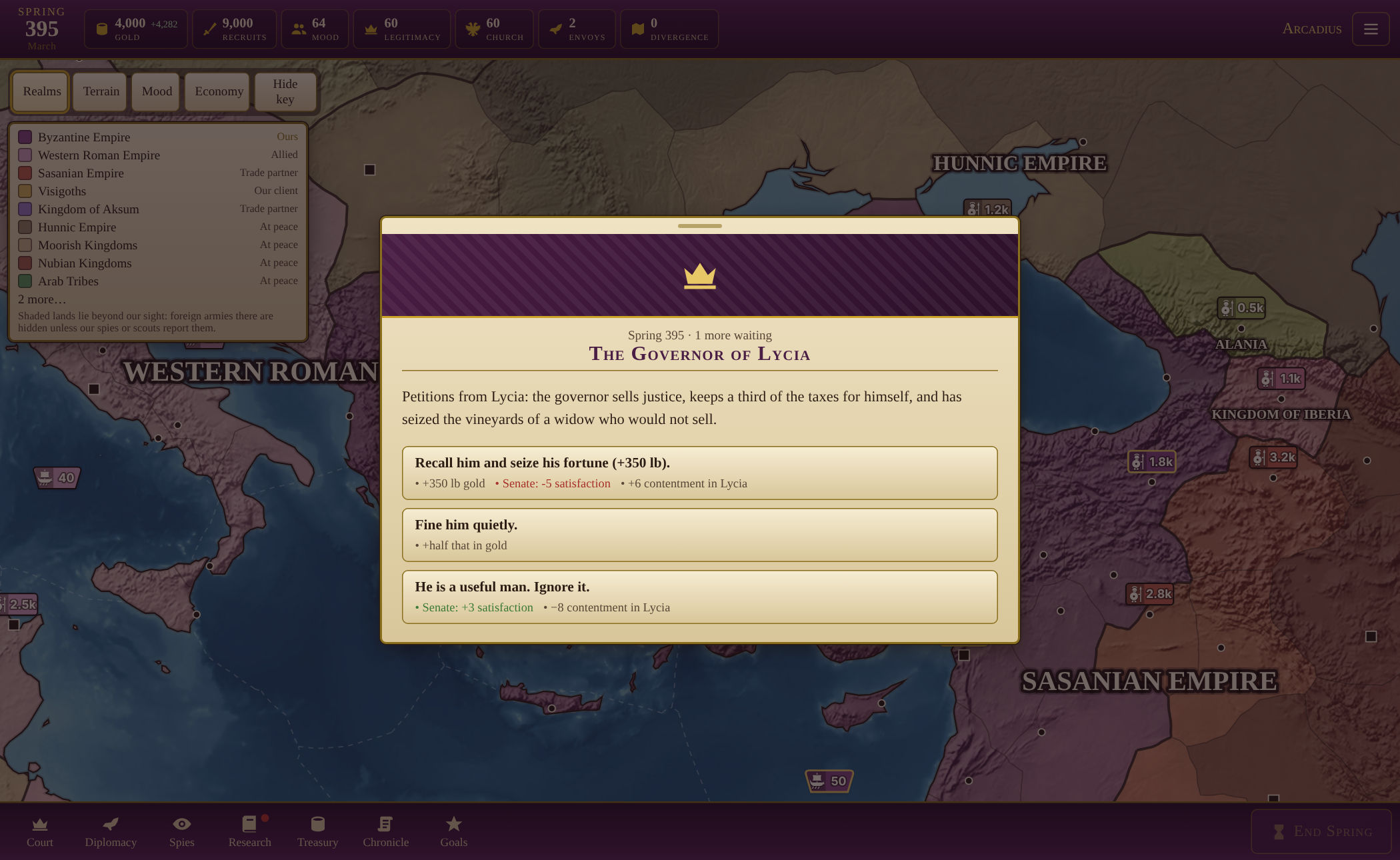
- Every decision is a card with real choices and their costs shown — and one marked as what the emperor of the day actually did
- "What really happened?" on every card, when you want to know and not before
- A divergence score that tracks how far your world has left the real one
- The history of your reign: maps then and now, your wars and great battles, and where your history parted from ours
The Empire's Best Weapon Was Never the Army
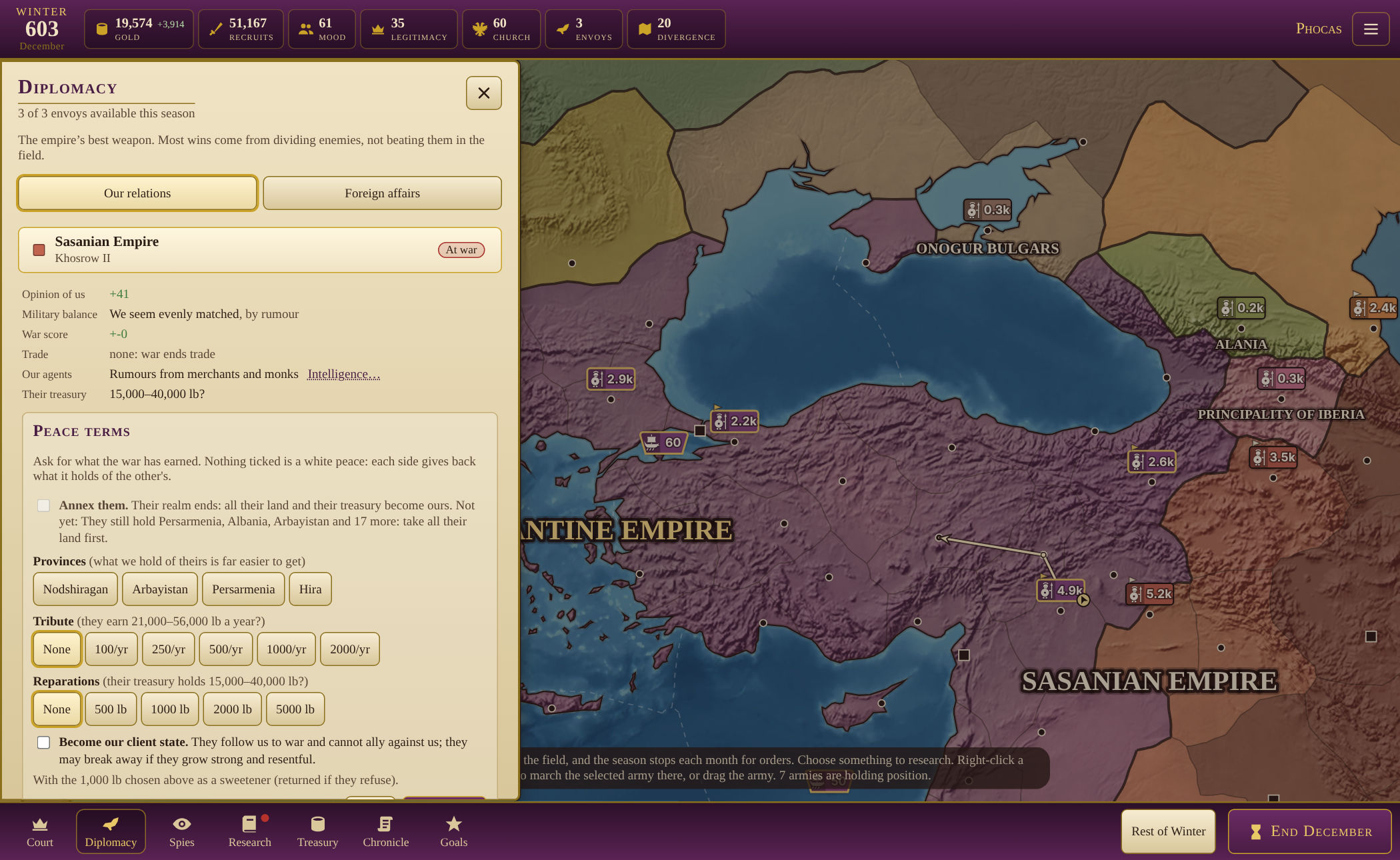
Byzantium outlived its enemies by dividing them. Subsidise one khan against another, buy a peace, turn a Persian general, stir a conquered people to rise. Most wins come from the war you arranged not to fight.
- Treaties, tribute, alliances, clients and trade with every realm from the Franks to the Tang
- A spy service that builds networks over years: what you know of a foreign court depends on who you have there
- Peace tables where land, tribute and vassalage are argued out, and annexation has to be earned
- News from abroad that travels at the speed of a ship — and sometimes arrives late
Armies That March, Fleets That Matter
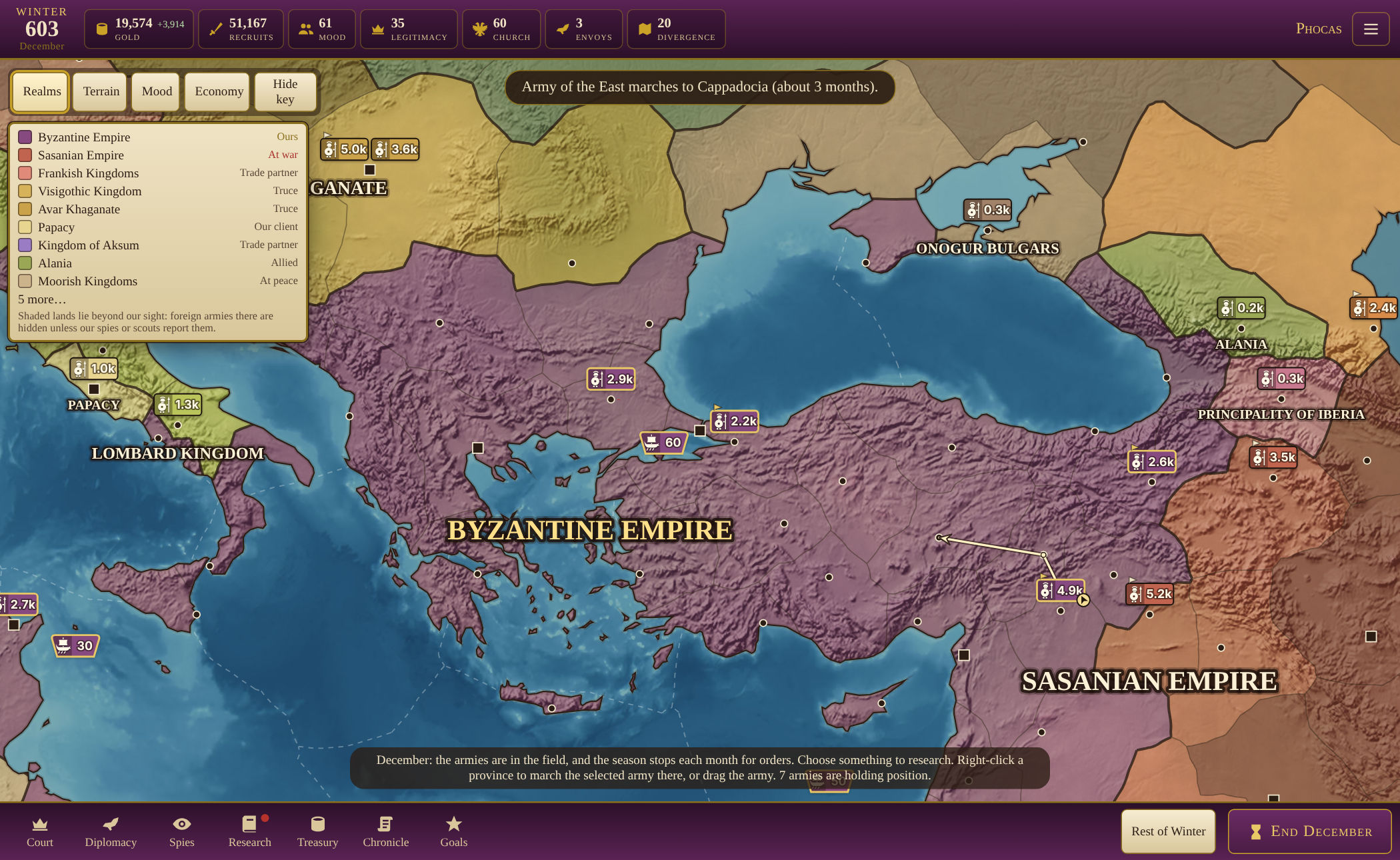
Seasons pass a month at a time. Armies take real weeks on real roads, eat what the country can feed them, and suffer in winter and desert. A city on the sea is only as besieged as the water around it — hold the straits and Constantinople cannot be starved.
- Every order drawn on the map: where each army and fleet is bound, and how long it will take
- Recruits take a season or two to muster — an army is raised before the war, not during it
- Carry armies by sea, blockade ports, supply your own, and hunt pirates out of the sea lanes
- Sieges decided by walls, hunger, relief and who holds the harbour
Fight the Battle Yourself — or Trust Your General
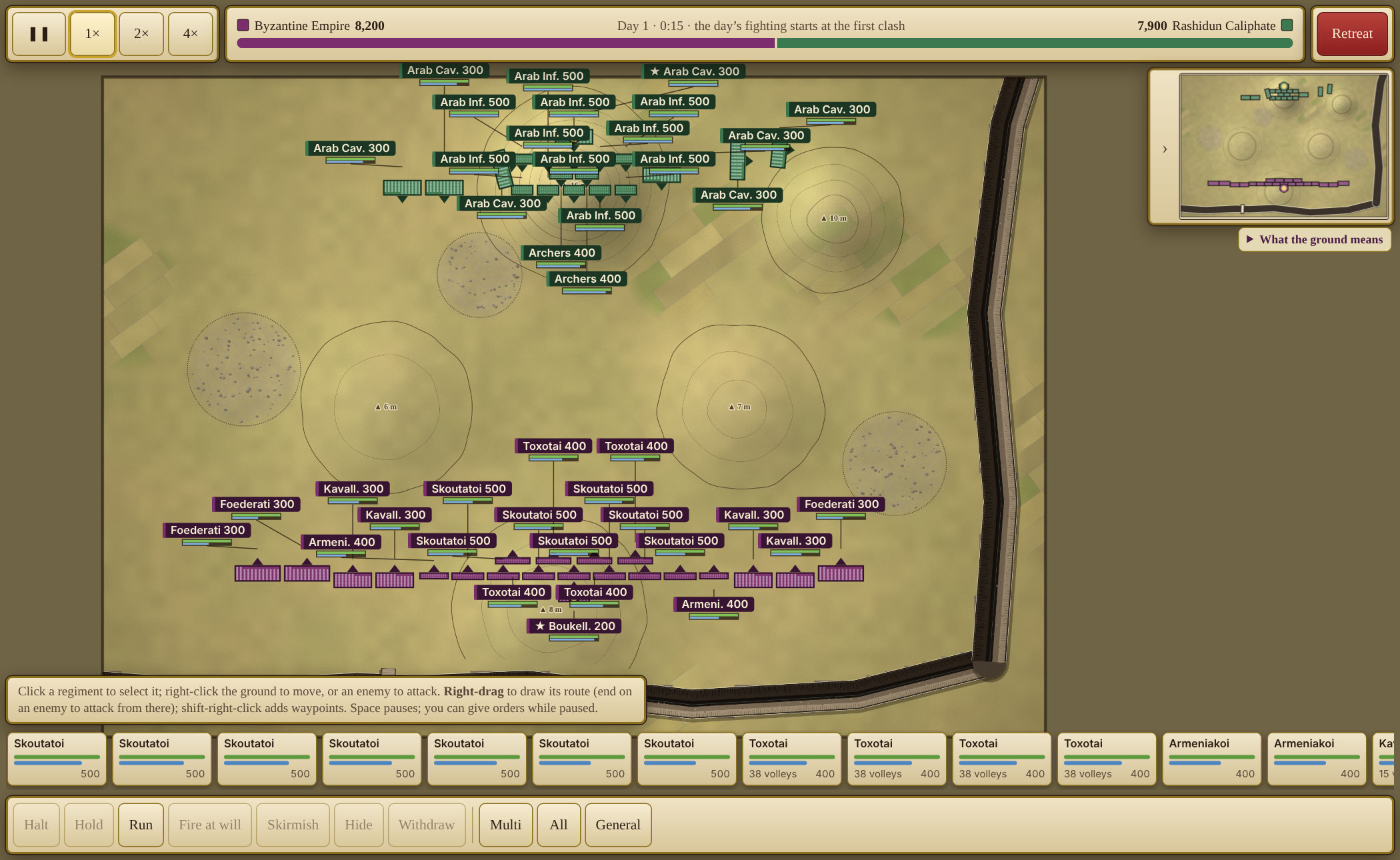
When armies meet you can take the field: regiments of spearmen, horse-archers and cataphracts on ground that matters, in real time with pause. Read the terrain, choose the general's plan, hold the reserve. Or leave it to the man you appointed and live with the result.
- A briefing before every battle: both armies by type, the ground, and the doctrine each general fights by
- Hills, rivers, marsh, walls, fog and weather; ambushes, flank marches and feigned retreats
- Great battles last days, with the night between to regroup
- Refight the battles of history on their own ground — Nineveh, the Yarmouk, the Varbitsa Pass, Kleidion and more
Know What You Are Walking Into
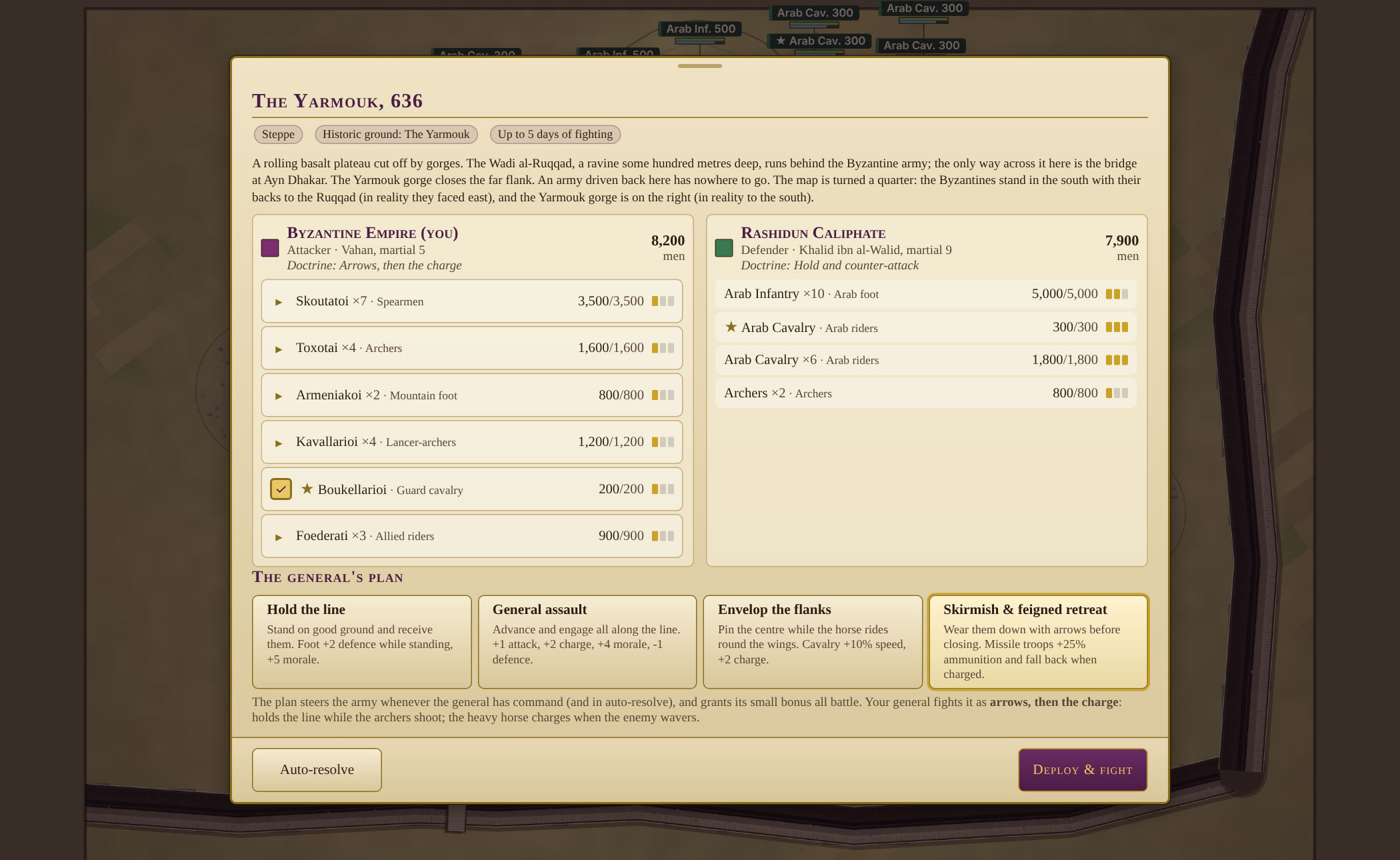
No hidden dice. Before you commit, the game tells you what you face and why a plan suits it: who commands, how good he is, what his army is made of, and what the ground will do to yours.
- Your army and theirs side by side, grouped by kind of troops
- Four plans of battle, each with its small edge and its risk
- Auto-resolve runs the same battle the same way — only faster
An Empire Is More Than Its Frontier
The treasury, the Church, the Senate, the circus factions, the army's pay, the mood of every province. A conquered people does not stay conquered without a garrison, a subsidy or its own laws. An empty treasury ends more reigns than a lost battle.
- Taxes, trade routes, loans, debasement and the price of each
- Contentment by province, with its causes named — and revolts when you ignore them
- Research from the schools of law to Greek fire, at the pace of centuries
- Plague, earthquake and famine on history's calendar, and some that are not
What Is Already Playable
Basileus is in development and playable from start to finish. This is what is in it now.
395 to 1453
One continuous campaign across more than a thousand years, entered at any of five crises.
A Living World
Dozens of realms with their own wars, alliances, trade and ambitions, from Britain to Persia.
Adaptive History
Peoples and powers arrive on their dates, in a form that suits the world they find.
Event Cards
Hundreds of decisions drawn from the sources, each with its costs shown and the historical choice marked.
Diplomacy
Envoys, treaties, tribute, alliances, clients, and peace terms argued clause by clause.
Espionage
Networks abroad, stolen secrets, turned generals, and a watch kept on foreign agents at home.
Month-by-Month Campaigns
Armies in the field move by the month; the season stops for your orders when it matters.
Supply & Weather
Roads, distance, terrain and winter decide how far an army goes and how much of it arrives.
Fleets
Warships and transports: blockade, relieve, carry armies, hold the straits, clear the pirates.
Sieges
Walls, garrisons, hunger and the sea. The Theodosian Walls are as hard to take as they were.
Real-Time Battles
Command regiments on varied ground with pause and speed controls, or auto-resolve by the same rules.
Historical Battles
Refight famous days on their own ground, on either side.
Court & Succession
Generals with ambitions, kingmakers, heirs, usurpers, and a legitimacy you have to keep.
Treasury
A real budget: taxes, trade, the court, the army's pay, loans, and what happens when the money runs out.
Provinces & Peoples
Mood, loyalty, unrest and independence movements, each with reasons you can read and act on.
Fog of War
Foreign armies beyond your sight are unknown until spies or scouts report them.
Four Difficulty Levels
From "Born in the purple" to "Last of the Romans", chosen when you begin.
Ironman
One save, no second tries at a battle, for those who want their history to count.
The History of the Reign
A record of your own playthrough, set against what really happened.
Mouse or Touch
Built for a desk and playable on a tablet or folding phone.
Original Music
A period-inspired score and sound, all optional.
Frequently Asked Questions
Five Crises. One Empire.
Do better than history did. Basileus: Shield of Byzantium is in development.